Junior Hanafuda
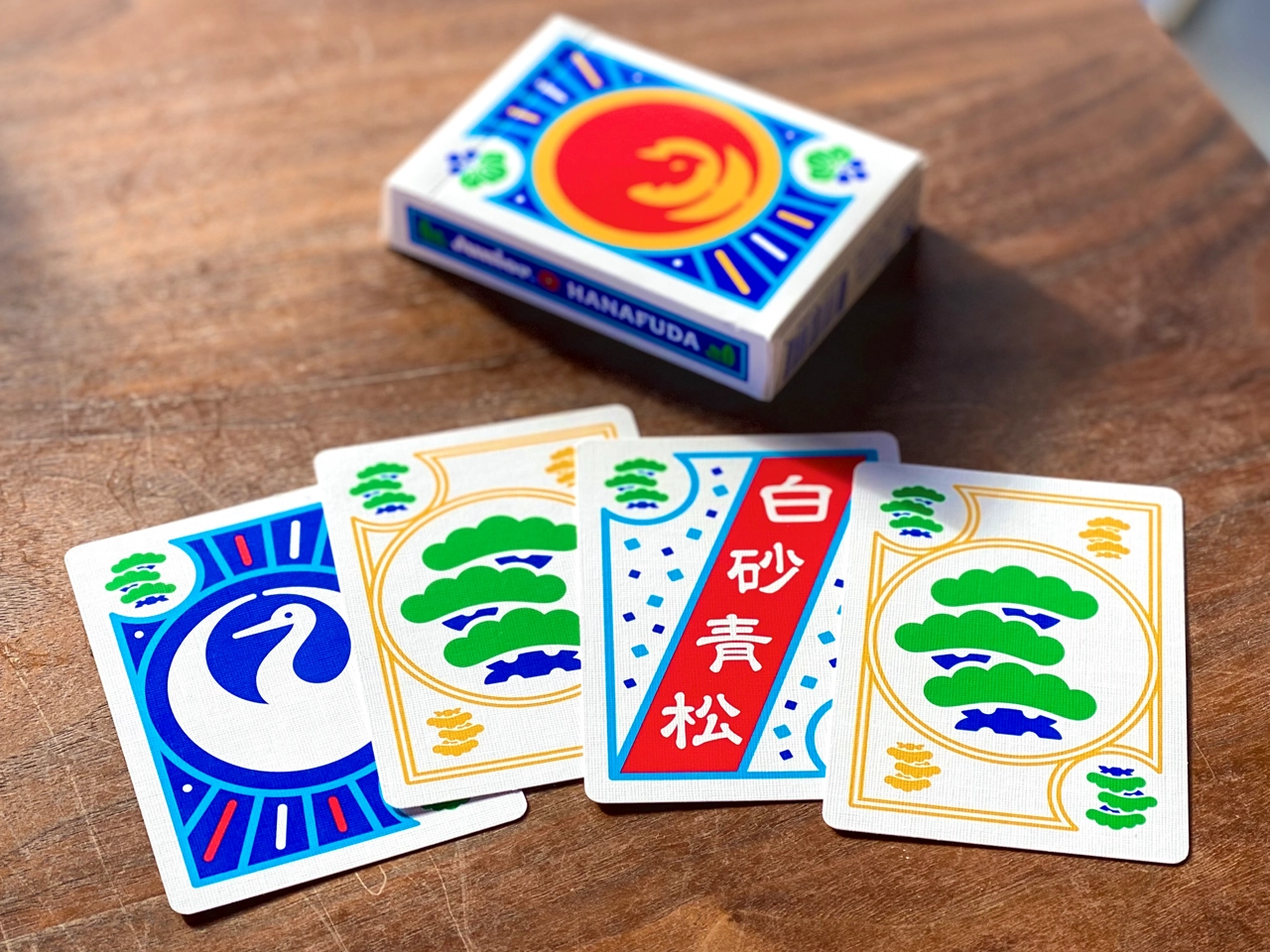
Pine cards from Junior Hanafuda alongside the Phoenix tuckbox.
Junior Hanafuda is an interpretation of Japanese hanafuda specifically designed so anyone can easily learn how to play.
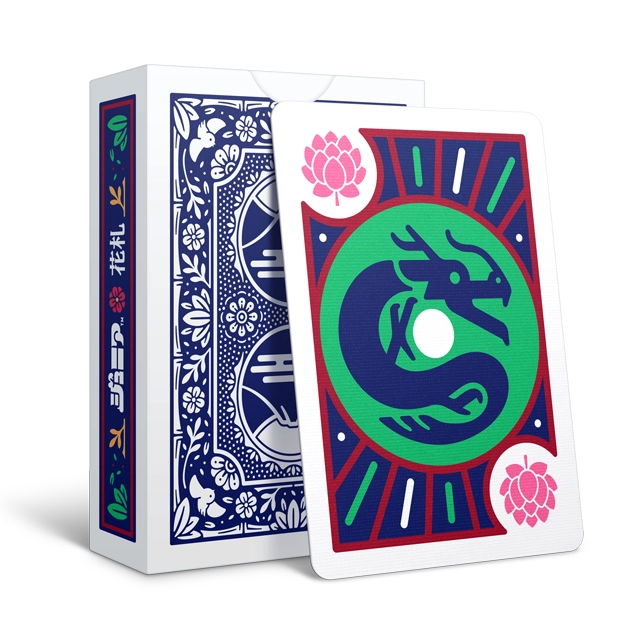
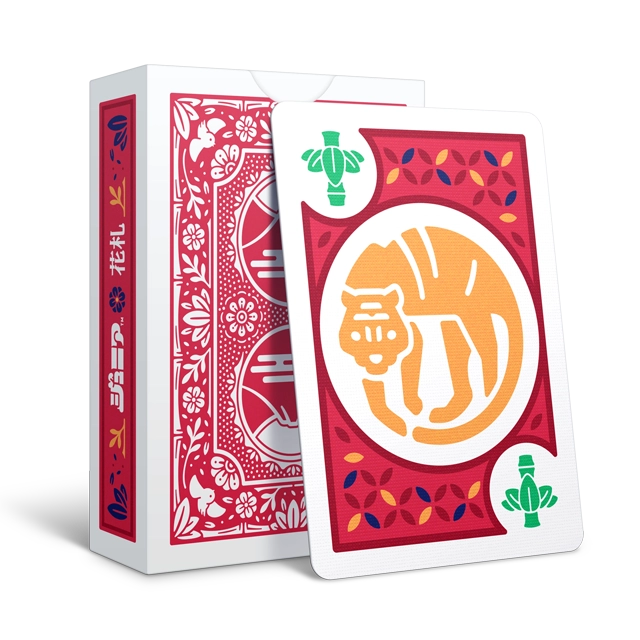
There are two editions, with three decks in total, a 13-month Phoenix deck and 14-month Dragon & Tiger decks.
Buy $5History
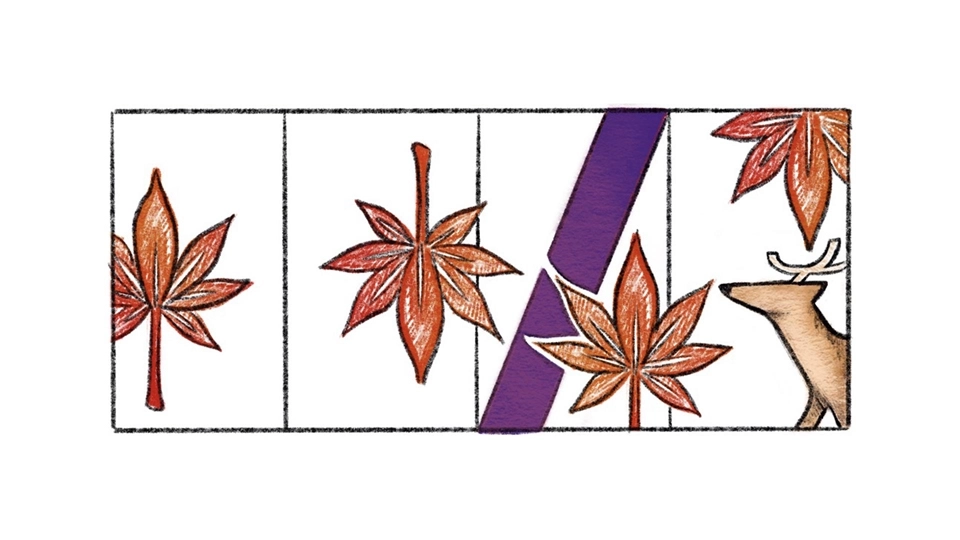
The earliest sketch for Junior Hanafuda, from April 2018.
In early 2018, while researching for an emoji design project, Louie Mantia learned about hanafuda, collected dozens of decks, and started to design his own interpretation.
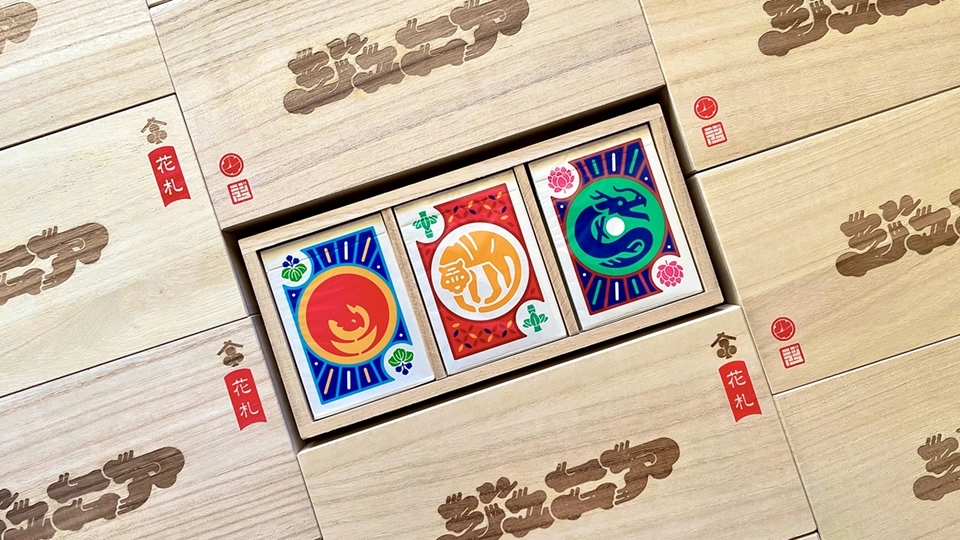
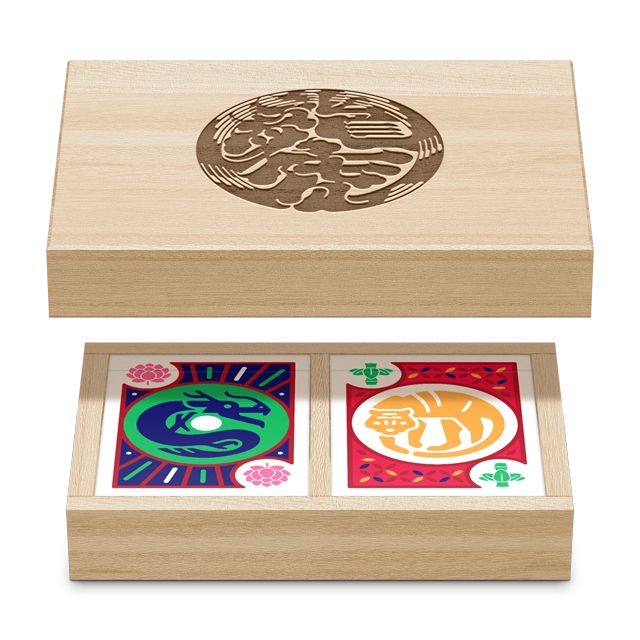
Junior Hanafuda inside a custom-made kiribako 桐箱 ▶ paulownia wood box.
Simultaneously, Louie also developed Junior as a brand for cards and games.
Junior Hanafuda started with an interest in mon 紋 ▶ crests, which typically represent families in Japan. Because these crests often depict the same plants and animals found in hanafuda, mon became the basis for the design of Junior Hanafuda.
The Phoenix edition of Junior Hanafuda was manufactured in November 2019 by The United States Playing Card Company in Erlanger, Kentucky.
In mid-2020, a Kickstarter project was launched for Dragon & Tiger, and the new edition went on sale in 2021.
Cards
Junior Hanafuda decks contain all 48 standard cards to play every game. Each of them are American poker-size decks. There are some design differences between them.
| Phoenix | Dragon | Tiger |
|---|---|---|
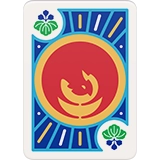 Phoenix Tuckbox Phoenix Tuckbox |
 Dragon Tuckbox Dragon Tuckbox |
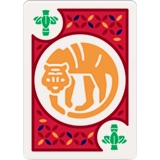 Tiger Tuckbox Tiger Tuckbox |
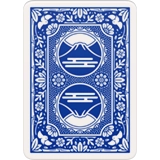 Blue Card Back Blue Card Back |
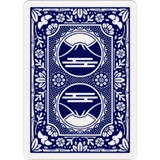 Blue Card Back Blue Card Back |
 Red Card Back Red Card Back |
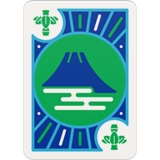 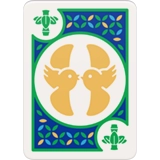 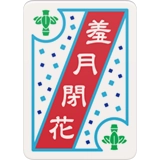    Extra Bamboo Month Extra Bamboo Month |
   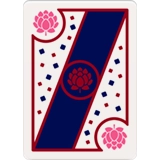 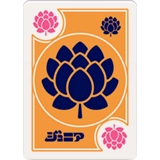 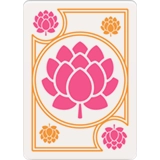 Extra Bamboo, Lotus Months Extra Bamboo, Lotus Months |
|
Phoenix
Phoenix is the first edition of Junior Hanafuda. Overall, it has a bright appearance with a blue card back. In addition to the standard cards, it contains a unique 6-card Bamboo month, allowing for up to 3 players and experimentation.
Phoenix is a 13-month, 54-card hanafuda deck.
| Month | Hikari | Tane | Tanzaku | Kasu |
|---|---|---|---|---|
 January January |
 Crane Crane |
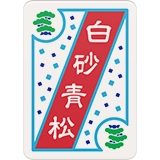 Poetry? Poetry? |
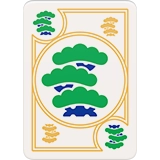 Pine Pine |
|
 February February |
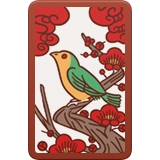
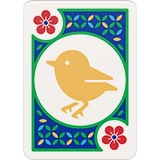 Warbler Warbler |
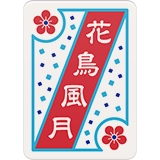 Poetry? Poetry? |
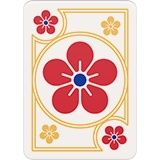 Plum Blossom Plum Blossom |
|
 March March |
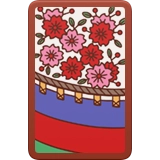
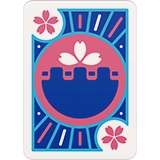 Curtain Curtain |
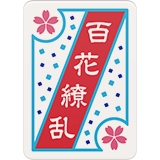 Poetry? Poetry? |
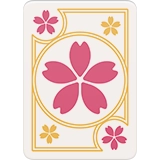 Cherry Blossom Cherry Blossom |
|
 April April |
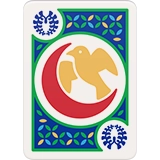 Cuckoo Cuckoo |
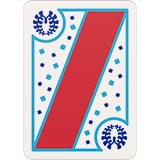 Plain Plain |
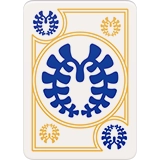 Wisteria Wisteria |
|
 May May |
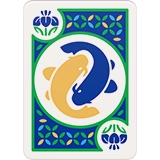 Koi? Koi? |
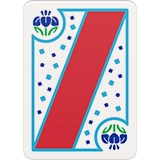 Plain Plain |
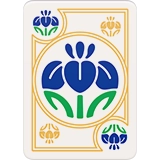 Iris Iris |
|
 June June |
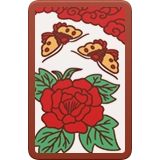
 Butterflies Butterflies |
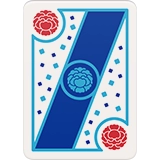 Blue Blue |
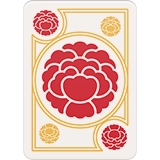 Peony Peony |
|
 July July |
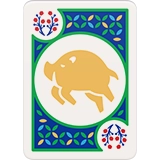 Boar Boar |
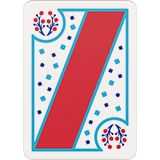 Plain Plain |
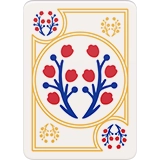 Bush Clover Bush Clover |
|
 August August |
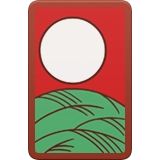
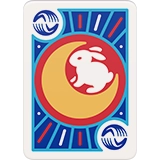 Moon Moon |
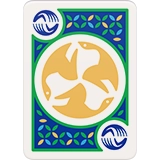 Geese Geese |
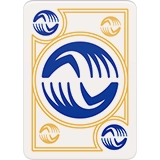 Silvergrass Silvergrass |
|
 September September |
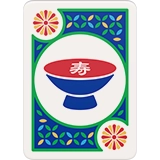 Sake Sake |
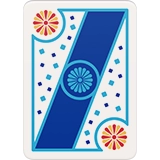 Blue Blue |
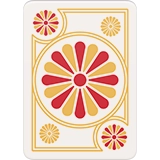 Chrysanthemum Chrysanthemum |
|
 October October |
 Deer Deer |
 Blue Blue |
 Maple Maple |
|
 November November |
 Frog? Frog? |
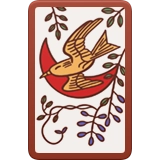
 Swallow Swallow |
 Plain Plain |
 Willow? Willow? |
 December December |
Phoenix |
  Paulownia? Paulownia? |
 Legend Legend |
Mt. Fuji |
Sparrows |
Poetry & Blue? |
Bamboo? |
This extra Bamboo month should be excluded for normal play, but it can be included to alter usual gameplay or to accommodate up to 3 players for some games. All six cards could also be used similarly to Korean hwatu jokers.
For those keen to experiment, any four cards can be assembled into an additional or substitute month. For example:
- Hikari, Tane, Kasu, Kasu
- Tane, Blue Tanzaku, Kasu, Kasu
- Hikari, Red Tanzaku, Kasu, Kasu
- Hikari, Tane, Blue Tanzaku, Red Tanzaku
Dragon & Tiger
Junior Hanafuda: Dragon & Tiger is the second edition, with some differences compared to its predecessor, Phoenix. It has a darker, richer color scheme. Dragon has a blue card back. Tiger has a red card back. Adding to the original 48-card hanafuda deck, these decks contain two additional months, Bamboo and Lotus, allowing for up to 4 players and additional flexibility.
Dragon & Tiger are 14-month, 56-card hanafuda decks.
| Month | Hikari | Tane | Tanzaku | Kasu |
|---|---|---|---|---|
| January |
 Crane Crane |
 Poetry? Poetry? |
 Pine Pine |
|
| February |
 Warbler Warbler |
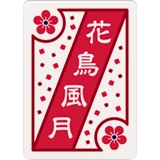 Poetry? Poetry? |
 Plum Blossom Plum Blossom |
|
| March |
 Curtain Curtain |
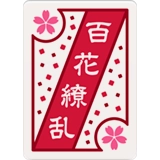 Poetry? Poetry? |
 Cherry Blossom Cherry Blossom |
|
| April |
 Cuckoo Cuckoo |
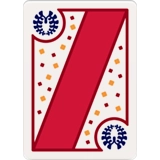 Plain Plain |
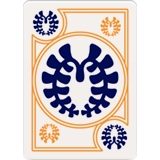 Wisteria Wisteria |
|
| May |
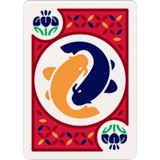 Koi? Koi? |
 Plain Plain |
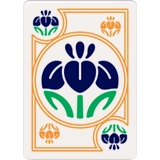 Iris Iris |
|
| June |
 Butterflies Butterflies |
 Blue Blue |
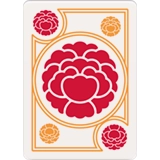 Peony Peony |
|
| July |
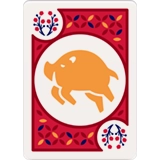 Boar Boar |
 Plain Plain |
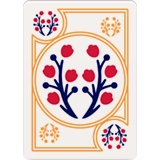 Bush Clover Bush Clover |
|
| August |
 Moon Moon |
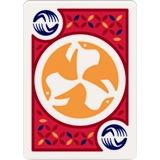 Geese Geese |
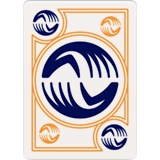 Silvergrass Silvergrass |
|
| September |
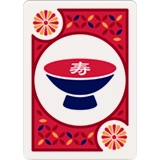 Sake Sake |
 Blue Blue |
 Chrysanthemum Chrysanthemum |
|
| October |
 Deer Deer |
 Blue Blue |
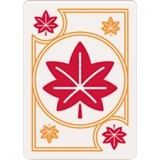 Maple Maple |
|
| November |
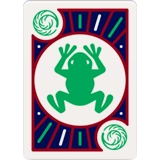 Frog? Frog? |
 Swallow Swallow |
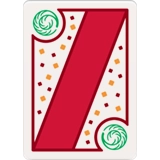 Plain Plain |
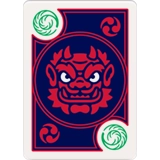 Willow? Willow? |
| December |
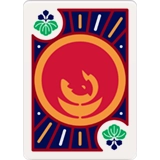 Phoenix Phoenix |
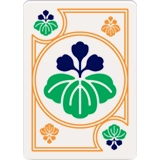 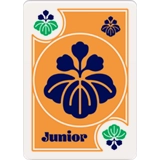 Paulownia? Paulownia? |
| Earth |
Tiger |
Poetry? |
Bamboo? |
|
 Heaven Heaven |
Dragon |
Blue |
Lotus? |
The Bamboo and Lotus months should be excluded for normal play, but they can be included to accommodate up to 4 players and additional win conditions.
These extra months are inspired by a Matsui Tengudō deck.
Details
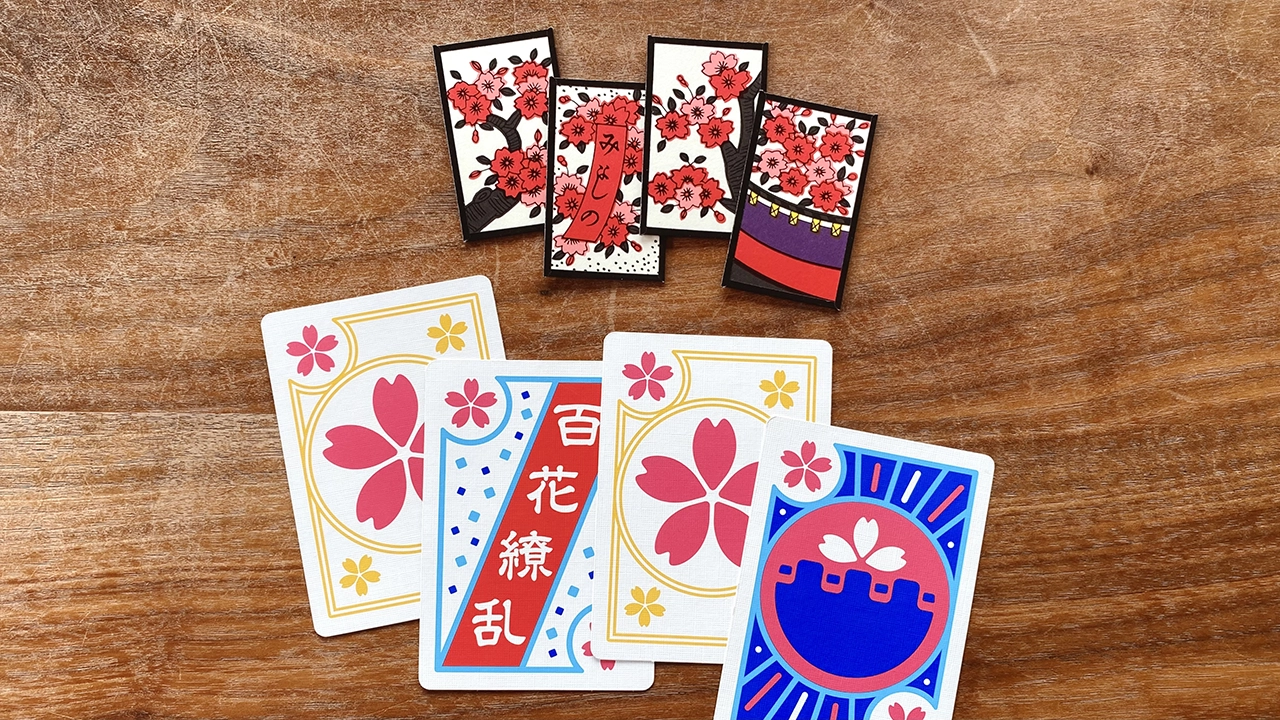
The February month from a Nintendo hanafuda deck compared with Junior Hanafuda.
Compared to traditional hanafuda, Junior Hanafuda decks feature a very different design. Card types have their own border treatments, and months are indicated by floral symbols in the corner.
There are minor content differences to be aware of while reading game instructions. These differences are merely cosmetic and do not affect gameplay.
| Traditional | Junior Hanafuda | ||||||
|---|---|---|---|---|---|---|---|
 |
 |
 |
 |
|
|
|
|
 |
 |
 |
 |
|
|
|
|
 |
 |
 |
 |
|
|
|
|
Hikari
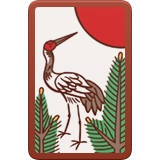
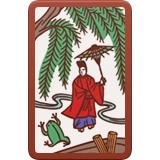
- On the November Hikari, Japanese-made hanafuda shows a figure holding an umbrella in the rain. On most decks, the person is specifically Ono no Michikaze, a calligrapher. In Junior Hanafuda, this card directs focus on the Frog in the scene, the subject of the story this card references.
Tane
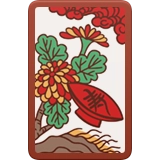
- The traditional May Tane card depicts yatsuhashi 八ツ橋 ▶ 8-plank bridge, though to make this card fit in better with other Tane cards with animals, Junior Hanafuda adapted this card to include Koi.
Tanzaku
While Poetry Tanzaku typically have simple words written on them, given the additional space on poker-size cards, Junior Hanafuda feature yojijukugo 四字熟語 ▶ four character idiomatic compounds.
- The January Tanzaku: 白砂青松 ▶ white sand, blue pine trees, describing beautiful coastal scenery.
- The February Tanzaku: 花鳥風月 ▶ flower, bird, wind, moon, meaning “the beauty of nature.”
- The March Tanzaku: 百花繚乱 ▶ a hundred flowers blooming, describing lots of beautiful people in the same place or a moment where many wonderful people achieve great things.
- The Earth / Legend Tanzaku: 羞月閉花 ▶ shy moon, closed flower, describing something so beautiful that even the moon and flowers are shy and hiding.
Kasu
- Typically, the Willow Kasu features an all-red lightning storm with thick willow branches. In Junior Hanafuda, Raijin 雷神 ▶ god of thunder takes its place. To complement it, Fujin 風神 ▶ god of wind is in the extra 13th month.
- Yellow-shaded cards (like the December Kasu) feature the brand name and typically function as normal Kasu cards, though some games may call for them to be treated a little differently.
Games
Junior Hanafuda can be used to play many games, including Koi-Koi and Hanaya.