Hanafuda
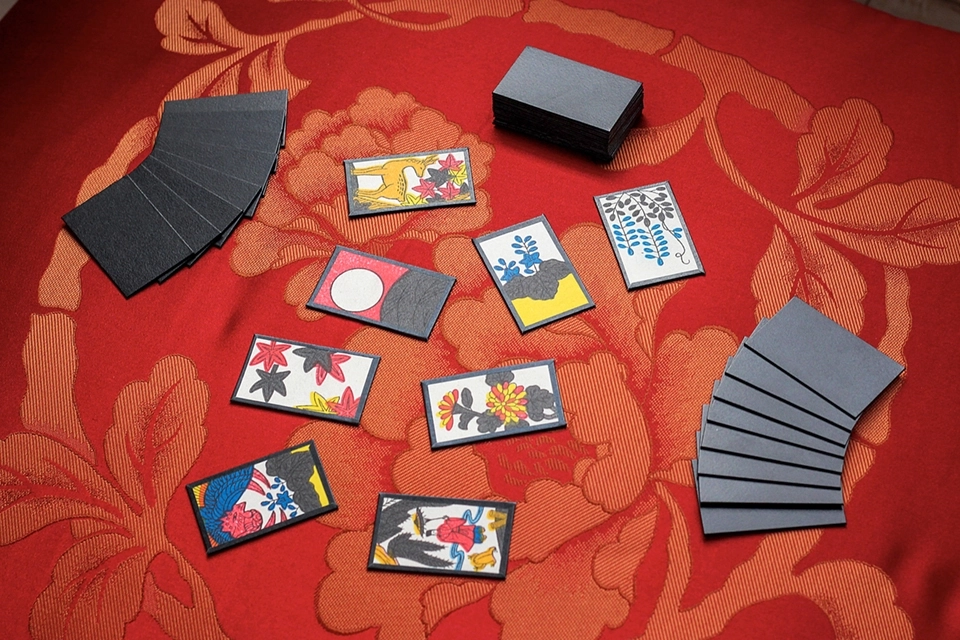
Hanafuda arranged in a typical setup for two players to play Koi-Koi. 📷 Marcus Richert
Hanafuda 花札 ▶ flower cards are a type of Japanese karuta かるた ▶ cards that are used to play games.
A typical hanafuda deck has 48 cards, with 12 suits and 4 ranks. They’re made of layered paper and are about half the size of Western cards.
In Korea, they’re made from plastic and are called hwatu 화투 ▶ flower fight.
History
In the mid-1500s, Portuguese traders introduced playing cards to Japan. These original Portuguese decks contained 48 cards, with 12 ranks and 4 suits.
Japan later closed the country to foreign influence, so locals started creating their own playing cards to meet the demand. Though early karuta initially replicated Portuguese cards, like unsun karuta うんすんかるた, new styles were subsequently invented, such as 株札 kabufuda, hyakunin isshu 百人一首 ▶ one hundred people, one poem each, and hanafuda.
The first versions of hanafuda may have been called hana-awase 花合わせ ▶ flower matching. These decks were significantly larger than their modern counterparts, supposedly totaling 64 or even 128 cards, though there may have only been 3 distinct ranks. Modern hanafuda, however, contains 48 cards, with 12 suits and 4 ranks.
Like many countries, playing cards were taxed by the Japanese government. Older hanafuda and karuta may have a tax stamp affixed to the bottom of the wrapper. Newer decks may have a sticker seal the of the same size. Some karuta, including hanafuda, is packaged in kiribako 桐箱 ▶ paulownia wood box. Hanafuda decks typically include paper instructions to play Koi-Koi and Hachi-Hachi.
Cards
There are 48 cards in hanafuda, depicting the flora and fauna of Japan. The 12 suits are typically called months. Months are represented by flowers and plants, and each month contains four cards unique to that month.
Ranks
- Hikari 光 ▶ light are the highest value cards, and represent significant Japanese cultural elements, stories, and traditions.
- Tane 種 ▶ subject cards mostly illustrate wild animals.?
- Tanzaku 短冊 ▶ paper strip cards have three varieties: poetry, blue, and plain. People write wishes during tanabata matsuri 七夕祭り ▶ star festival, and hang them on bamboo branches.
- Kasu カス ▶ scrap are the lowest value cards. They portray various flowers and plants found in Japan.
Point Values
In most cases, Hikari are worth 20 points, Tane are worth 10 points, Tanzaku are worth 5 points, and Kasu are worth just 1 point each.
The total value of the deck is 264 points. However, some games ignore card point values (like Koi-Koi) or have their own (like Sakura).
Deck
| Month | Hikari | Tane | Tanzaku | Kasu |
|---|---|---|---|---|
 January January |
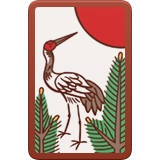 Crane Crane |
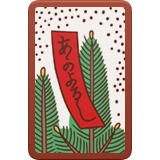 Poetry? Poetry? |
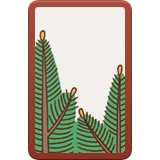  Pine Pine |
|
 February February |
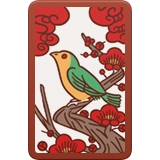 Warbler Warbler |
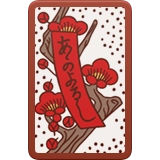 Poetry? Poetry? |
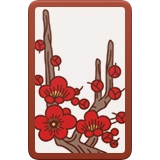 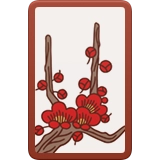 Plum Blossom Plum Blossom |
|
 March March |
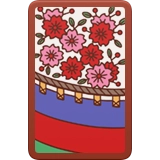 Curtain Curtain |
 Poetry? Poetry? |
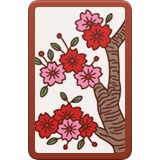 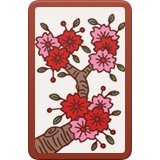 Cherry Blossom Cherry Blossom |
|
 April April |
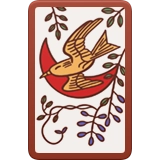 Cuckoo Cuckoo |
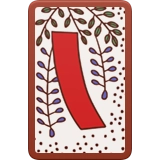 Plain Plain |
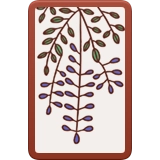 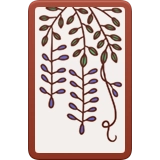 Wisteria Wisteria |
|
 May May |
 Bridge? Bridge? |
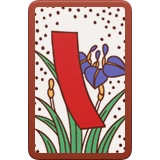 Plain Plain |
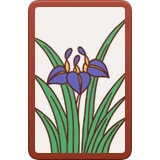  Iris Iris |
|
 June June |
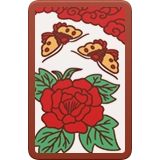 Butterflies Butterflies |
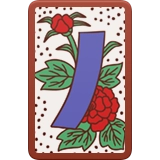 Blue Blue |
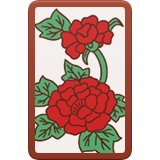  Peony Peony |
|
 July July |
 Boar Boar |
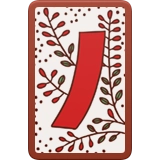 Plain Plain |
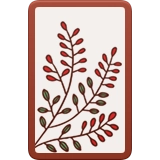 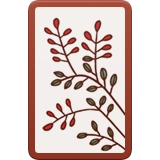 Bush Clover Bush Clover |
|
 August August |
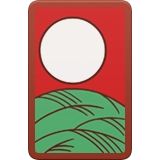 Moon Moon |
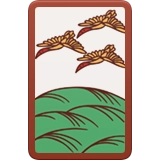 Geese Geese |
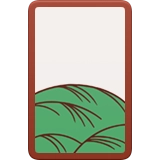  Silvergrass Silvergrass |
|
 September September |
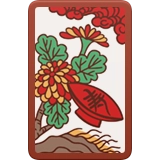 Sake? Sake? |
 Blue Blue |
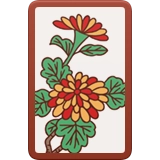 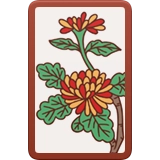 Chrysanthemum Chrysanthemum |
|
 October October |
 Deer Deer |
 Blue Blue |
  Maple Maple |
|
 November November |
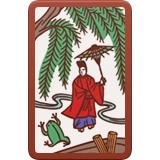 Rainman Rainman |
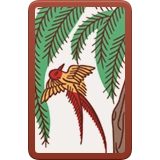 Swallow Swallow |
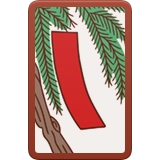 Plain? Plain? |
 Willow? Willow? |
 December December |
 Phoenix Phoenix |
 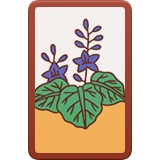 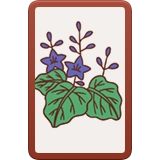 Paulownia? Paulownia? |
Details
Hikari
Hikari cards depict significant Japanese cultural imagery, such as a crane with the rising sun, a cherry blossom viewing, a full-moon viewing, and a legendary phoenix.
- The November Hikari shows a figure holding an umbrella in the rain. On most Japanese-made decks, the person is specifically Ono no Michikaze, a calligrapher.
Tane
Though not all Tane cards follow this scheme, the subject matter seems to be modeled after kachō-ga 花鳥画 ▶ bird-and-flower paintings.
- The May Tane card features yatsuhashi 八ツ橋 ▶ 8-plank bridge. Perhaps to make this card fit in better with other Tane cards, Matsui Tengudō added fireflies on the iris leaves.
- The September Tane card depicts a sake cup with the character for kotobuki 寿 ▶ congratulations.
Tanzaku
In hanafuda, Poetry Tanzaku have simple words written on them.
- Akayoroshi あかよろし ▶ red is good on the January and February Tanzaku means these cards are valuable.
- Miyoshino みよしの ▶ beautiful Yoshino on the March Tanzaku is the name of a town famous for cherry blossoms of the same name.
- The November Tanzaku is the only Tanzaku without small dots in a typical deck. This card is sometimes excluded from Tanzaku yaku 役 ▶ set.
Kasu
Generally, Kasu cards depict a plant or flower with a significant amount of white space, though some differ in style from the others.
- The November Kasu card typically depicts a lightning storm with a red sky and thick willow branches. It is sometimes used as a Wild card. In some decks, the lightning card features Raijin 雷神 ▶ god of thunder.
- The yellow-shaded December Kasu card is stylistic, functions as a normal Kasu card, and usually displays the brand name. In some games, it could be used as an additional Tanzaku or Tane card.
Extra Cards

Three shirofuda: a blank card, as a replacement, and with a serial number.
Most decks of hanafuda include one shirofuda 白札 ▶ white card. It may be used to draw a replacement, or it could have a printed serial number.
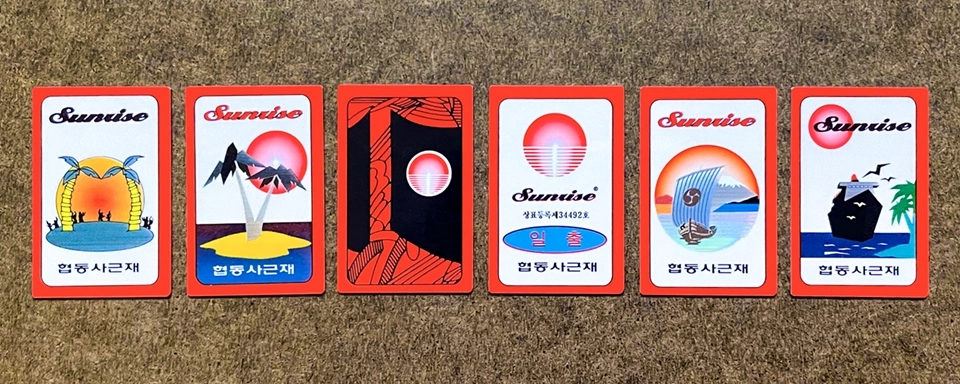
Six extra hwatu cards.
In Korean hwatu, it is common to see 6 extra cards for Go-Stop, used for optional game mechanics. These cards are often stylistically different, complete with manufacturer logos.
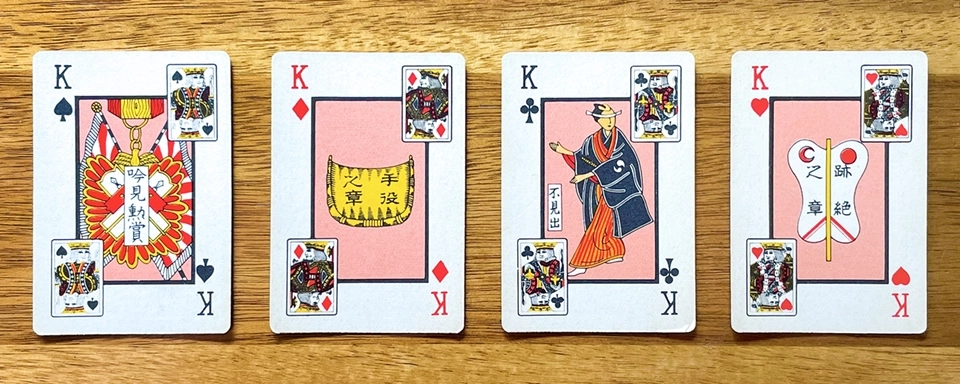
Hybrid deck with game accessory cards.
In hybrid decks where Ace through Queens double as months (January to December), Kings often display related game accessories.
Extra Months
Extra months are rare in hanafuda, but with their inclusion, decks can accommodate more players. For example, with extra months, it’s possible to play an equivalent of Hachi-Hachi with 4 players instead of just 3 players.

Hybrid deck with snowy bamboo month.
One particular hybrid deck from The Universal Playing Card Company used King cards as a 13th hanafuda month (snowy bamboo).
The total point value of all cards in this deck (304) divided by 4 players is 76 points per player, assuming the yellow-shaded December Kasu card acts as a Tanzaku card.?
| Month | Hikari | Tane | Tanzaku | Kasu |
|---|---|---|---|---|
 Kings Kings |
 Princess Yaegaki Princess Yaegaki |
 Sparrows Sparrows |
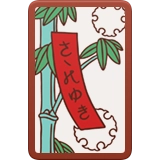 Poetry Poetry |
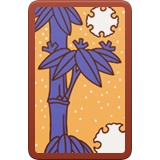 Snowy Bamboo Snowy Bamboo |
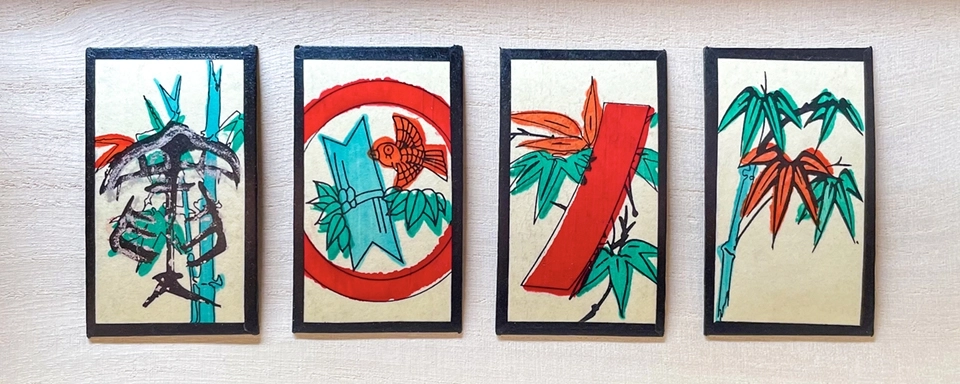
Bamboo month from Matsui Tengudō.
Matsui Tengudō produced two decks with additional months. The first deck had 52 cards, which included a 13th month (bamboo).
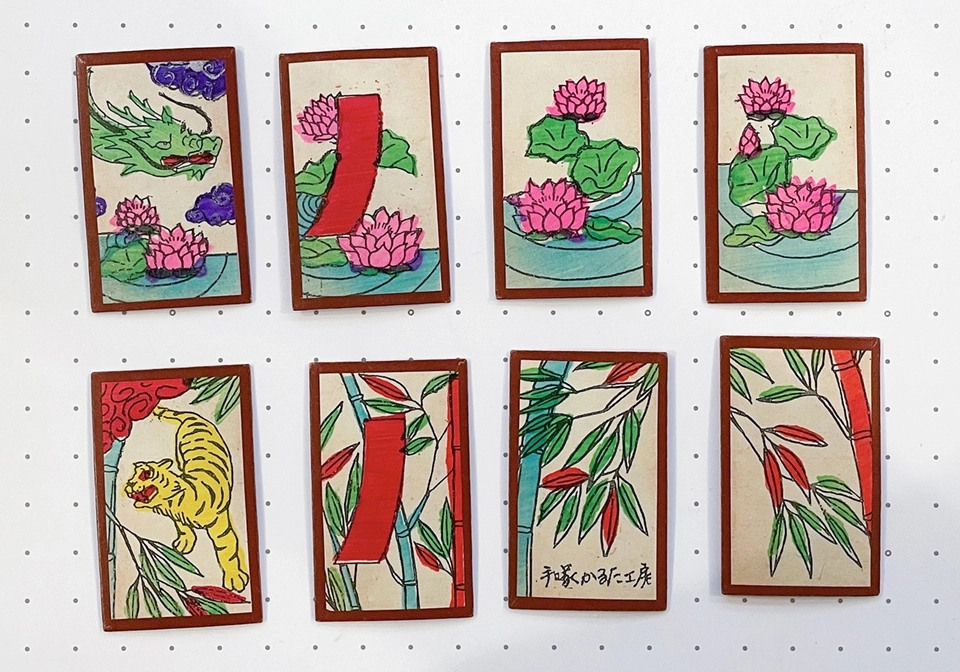
Lotus and bamboo months from Matsui Tengudō.
In that deck, one August Kasu and one December Kasu are shaded red and are scored like Tanzaku cards. The deck total is 308 points, 77 points per player for a 4-player game.
A later 56-card deck included two new “months,” a 13th month (bamboo) and a 14th month (lotus). This particular arrangement allowed for a 4-player game with a target score per player of 77 points, all without repurposing any cards from a typical deck.
| Month | Hikari | Tane | Tanzaku | Kasu |
|---|---|---|---|---|
| Earth |
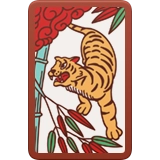 Tiger Tiger |
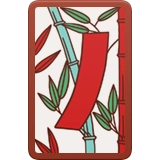 Plain Plain |
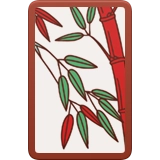  Bamboo Bamboo |
|
 Heaven Heaven |
 Dragon Dragon |
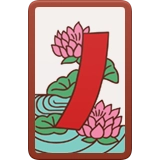 Plain Plain |
  Lotus Lotus |
Games
Hanafuda can be used to play many games, including:







Brands
Legacy
- Nintendō 任天堂
- Matsui Tengudō 松井天狗堂
- Ōishi Tengudō 大石天狗堂
- Tamura Shogundō 田村将軍堂
Revival
- Hanafuda Hawaii
- IndianWolf Studios
- Junior
- Richert Karuta
- Suzuki Tengudō
Related
See also
References and further reading
- Ebashi, Takashi 花札
- Ebashi, Takashi 江戸時代~昭和時代 伝統の花札一覧
- Pollard, George The History & Art of Hanafuda
- Pollard, George Traditional Hanafuda Brands